Skip to content

Home/Treatments

Treatments

Four procedures,
one pair of hands.

Dr Matee performs every procedure himself — design, extraction and placement. Three of the four are surgical and share the same MinSim FUE™ technique; the fourth supports the hair you still have.

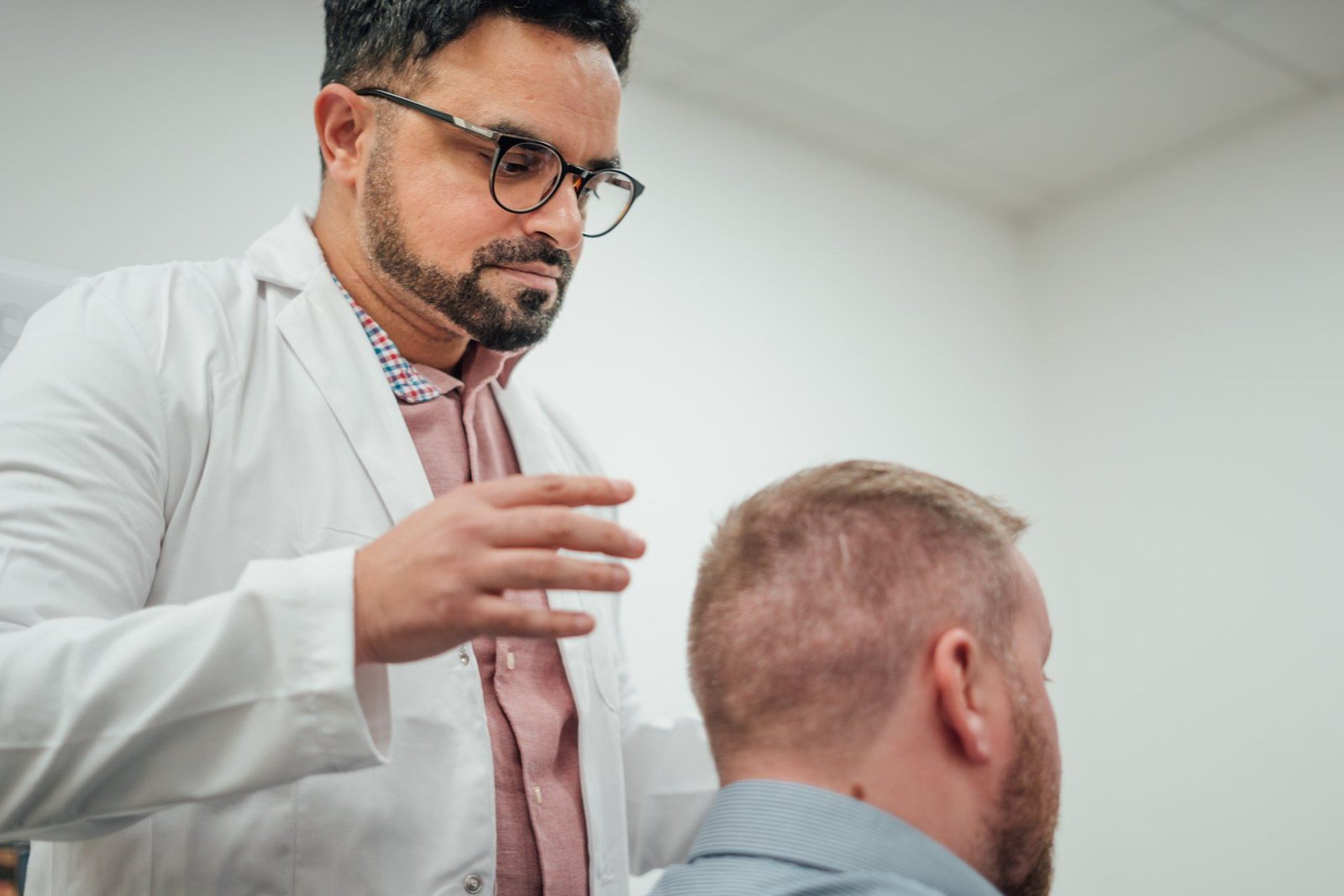
Dr Matee examining a patient's donor area before an FUE hair transplant
Dr Matee examining a donor area
01 — Surgical

MinSim FUE™ hair transplant

Male and female pattern loss on the scalp. Follicular units taken one at a time from the donor area and placed to follow your own hair's exit angle. No linear scar, no stitches, home the same evening.

Read about FUE hair transplants →
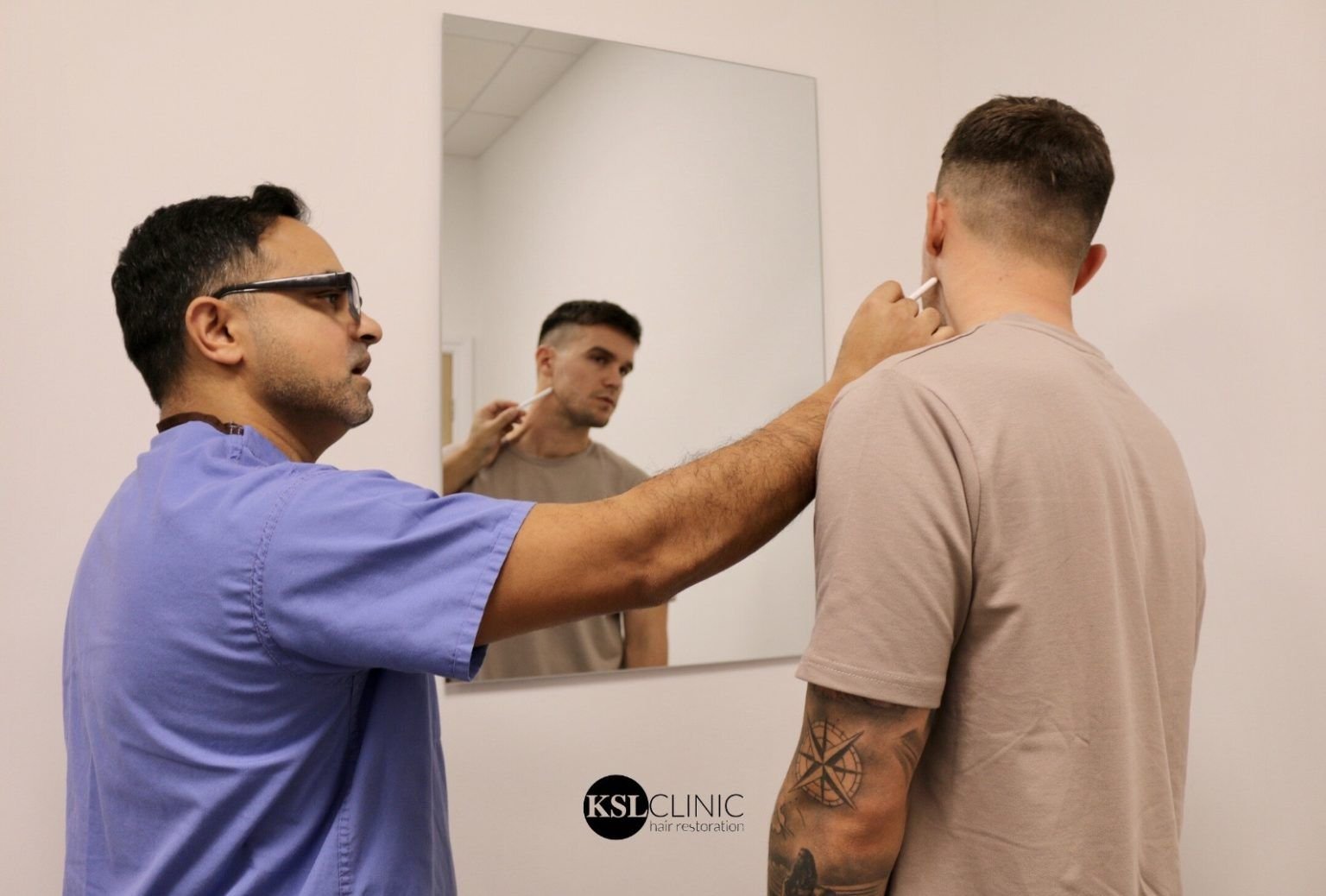
Dr Matee marking out a beard transplant design
02 — Surgical

Beard transplant

Patchy growth, a thin jawline, or gaps left by scarring or alopecia areata. Beard hair leaves the skin at a sharper angle than scalp hair, so it is designed and placed differently.

Read about beard transplants →
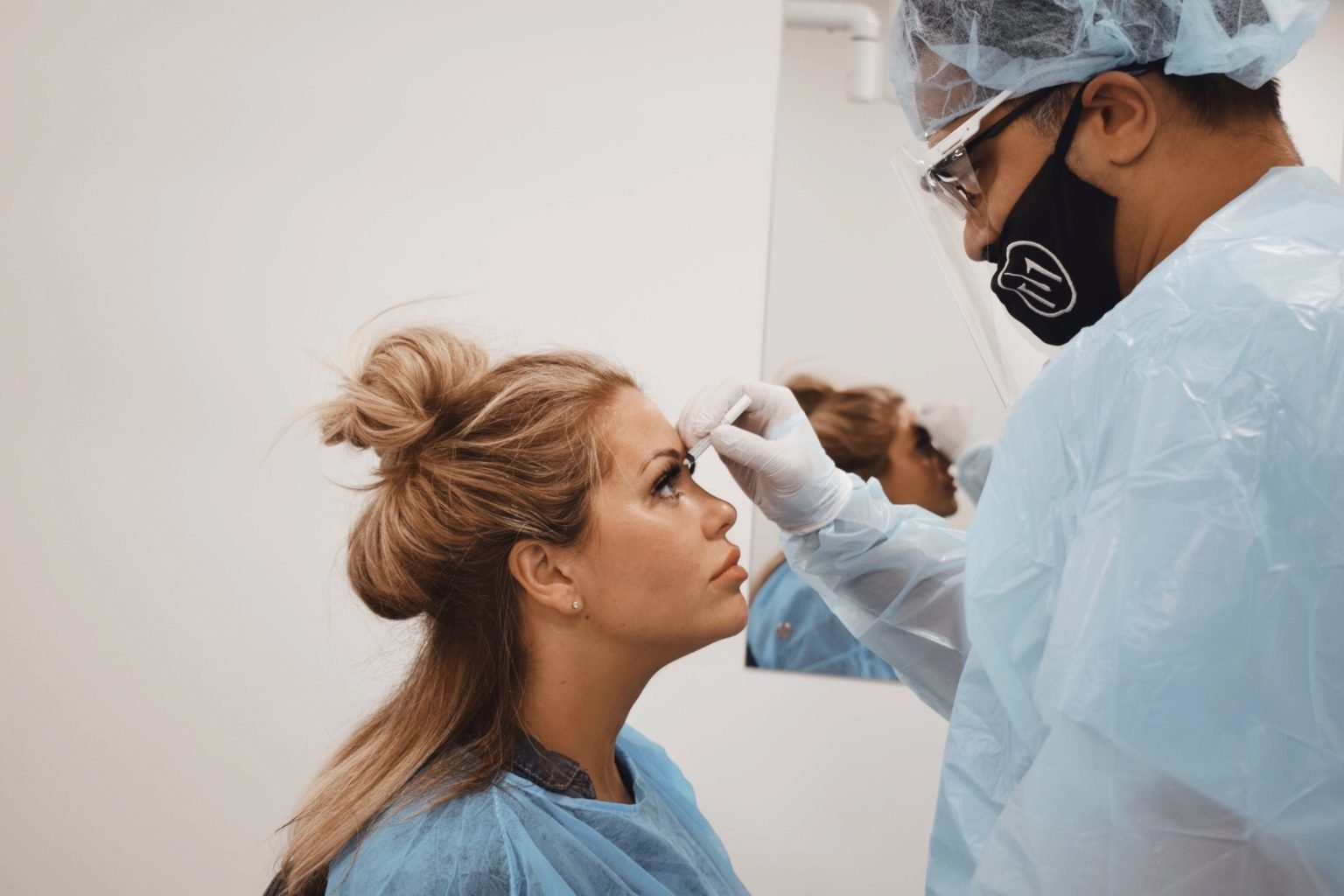
Dr Matee marking an eyebrow transplant design
03 — Surgical

Eyebrow transplant

Over-plucking, alopecia or scarring. The most technically demanding work he does — brow hairs sit almost flat to the skin, so every graft has to be angled individually.

Read about eyebrow transplants →
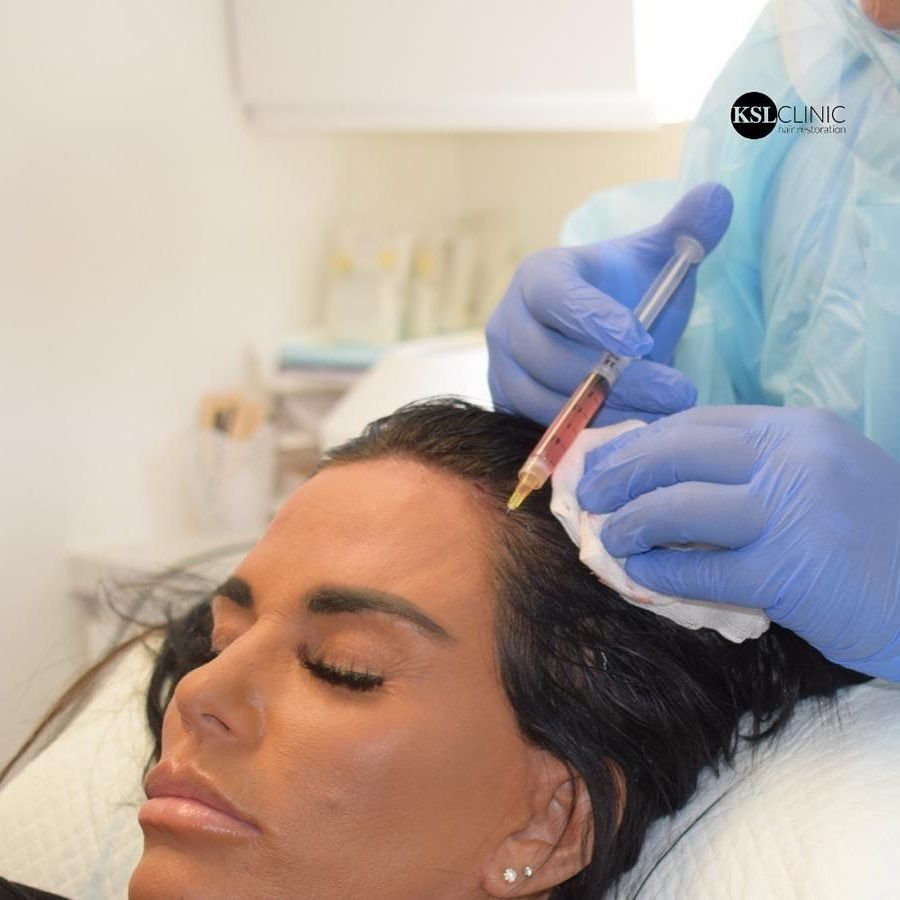
Platelet-rich plasma being injected at the hairline
04 — Non-surgical

PRP therapy

Platelet-rich plasma drawn from your own blood and reinjected to stimulate follicles into an active growth phase. Usually alongside a transplant rather than instead of one.

Read about PRP therapy →

The technique

What MinSim FUE™ means

Dr Matee's MinSim FUE™ technique combines Follicular Unit Extraction with the lateral slit method of implantation. FUE governs how each unit leaves the donor area; the lateral slit governs the angle and direction it goes back in.

Together they aim at two things at once — a natural-looking result in the recipient area, and a donor area that recovers without the thinned, over-harvested look. It is the same underlying technique whether the grafts are going into a scalp, a jawline or a brow.

  • No linear scar and no stitches — extraction sites close on their own
  • Local anaesthetic only; you are awake throughout
  • Suitable for straight, curly and afro hair, each at a different punch angle
Dr Matee assessing a patient before a procedure

Choosing

Which one applies to you?

?

Losing scalp hair

A receding hairline, a thinning crown, or both. Start with the FUE page — and the estimator will give you an indicative graft range.

?

Facial hair gaps

Patchy beard, a jawline that will not fill in, or scarring. Beard and eyebrow work use the same technique at a different angle.

?

Not ready for surgery

If loss is early or still progressing, PRP may be the sensible first step — or the honest answer may be to wait. You will be told which.

Not sure? The free consultation exists precisely to answer this. Dr Matee measures donor density in person and will tell you if a procedure is not worth doing.

Where this is performed

Two surgical clinics, seven consultation cities

Surgery takes place in Kent or Manchester. Consultations are available closer to home in seven further cities — all with Dr Matee himself.

Not sure which is nearest? All clinic addresses and phone numbers are listed together.

Side by side

Comparing the four

Three are surgical and share one technique; the fourth is not surgery at all. What separates them is the area treated, the angle the hair has to sit at, and how many grafts the job takes.

ProcedureTreatsSurgicalTypical graftsResult judged
MinSim FUE™ Male and female pattern loss on the scalp — receding hairline, thinning crown, or both Yes Varies widely with the area covered; measured at consultation Twelve months
Beard transplant Patchy facial growth, a weak jawline, gaps from scarring or alopecia areata Yes Around 1,000–3,000 Twelve months
Eyebrow transplant Over-plucking that never grew back, alopecia, scarring from injury or surgery Yes A few hundred per brow Twelve months
PRP therapy Thinning where follicles are still present but underperforming No Not applicable — a course of sessions Over the course, then maintenance

Graft counts are indicative. Yours depends on donor density, how much ground is being covered and how much loss is still to come — which is what the free consultation measures.

The common thread

Why three of them are the same operation

Scalp, beard and brow work all use MinSim FUE™. Follicular units are taken one at a time from the back and sides of the scalp — the only donor area in all three cases — and placed using the lateral slit method, which controls the angle and direction each graft goes back in.

What changes between them is that angle. Scalp hair leaves the skin at a moderate angle; beard hair at a much sharper one; brow hair lies almost flat and changes direction along its length. Get the angle wrong and the hair grows in a direction it should not, which is what makes bad work readable at a glance.

One donor area, finite supply

All three surgical procedures draw on the same donor region. If you want more than one, the order matters and the supply has to be allocated deliberately — which is part of the conversation at consultation rather than an afterthought.

Surgical or not

Where PRP sits

PRP is frequently misunderstood as an alternative to surgery. It is not.

What it can do

Stimulate follicles that are still present but underperforming back into an active growth phase. That makes it useful early, while there is still something to work with, and useful alongside surgery to support both the new grafts and the hair that was never moved.

What it cannot do

Create hair where the follicle has gone. If an area is genuinely bald, no injectable will bring it back — that is what a transplant is for. Anyone selling PRP as a substitute for surgery in a bald area is selling you a course that will not work.

Find out where you actually stand

A free, in-person assessment with Dr Matee — donor density, a realistic graft count, and a straight answer on whether surgery is right for you.