
Home/Treatments/Beard transplant
Beard transplant · Kent & Manchester
A beard that fills in
where it never has.
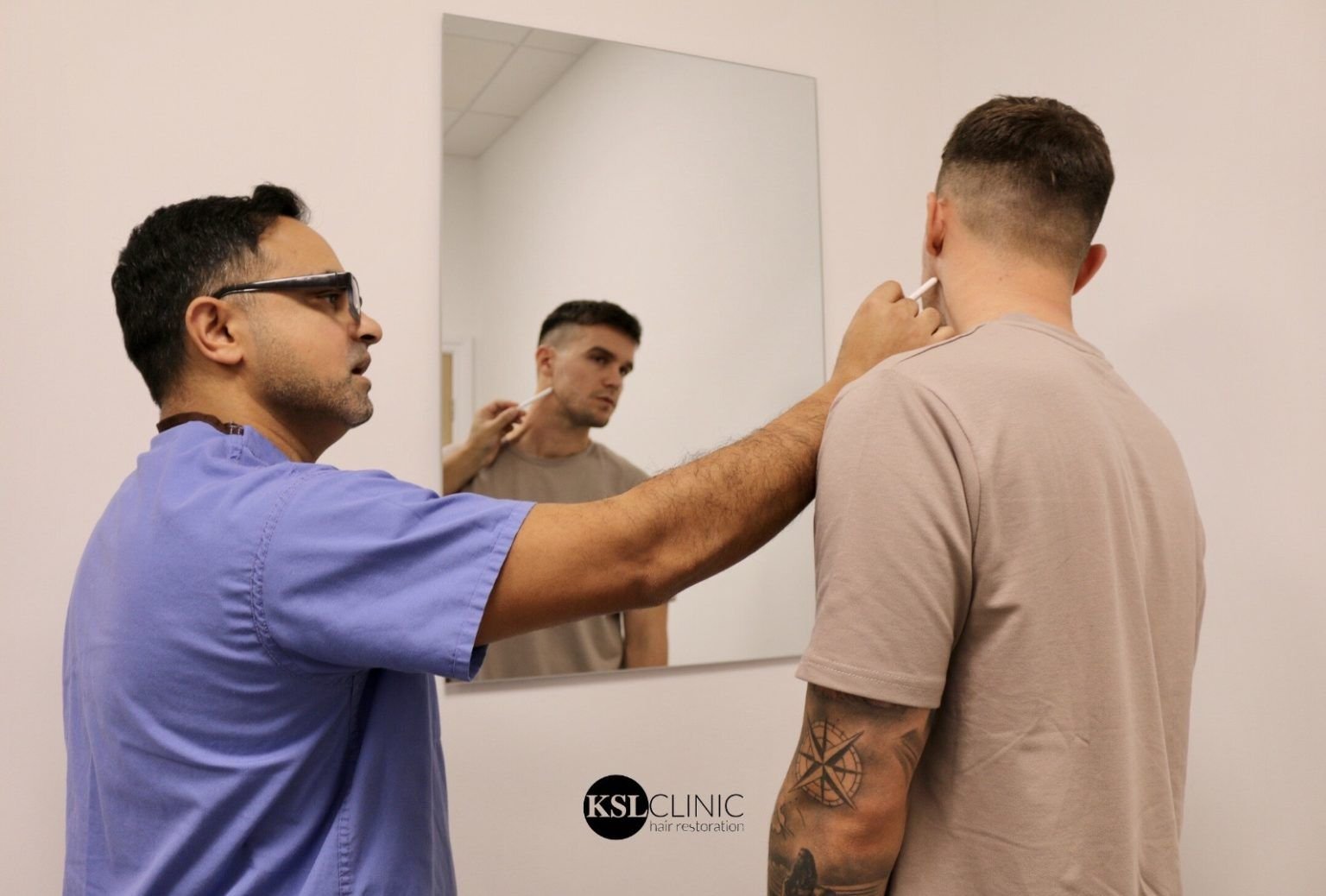
FUE beard transplants using the same MinSim FUE™ technique, placed at the sharper angle facial hair demands — for patchy growth, a thin jawline, or gaps left by scarring.
- AnaestheticLocal only — you are awake throughout
- Typical graftsAround 1,000–3,000, confirmed at consultation
- Donor areaBack and sides of your own scalp
- Shaving againUsually around ten days
- Final resultJudged at twelve months
- Performed byDr Matee Ullah, GMC No. 7043306
In short
A beard transplant takes follicular units from the back and sides of your scalp and places them along the jaw, chin, cheeks or moustache. Because facial hair leaves the skin at a much sharper angle than scalp hair, the design and placement are different work — the angle is what decides whether it reads as a real beard. Once grown, it shaves and trims like the rest of your beard.
Why beards are patchy
What causes it in the first place
Whether you grow facial hair, how much, how thick and whether it comes in full or patchy is governed by several things at once — genetics, hormones, and lifestyle factors among them. Conditions such as alopecia areata can also leave defined bald patches.
None of that is something a transplant reverses. What a transplant does is add hair that is genetically programmed to grow, into the areas where your own does not.
That is why the consultation looks at the pattern as well as the density: filling a small patch and building a beard line from very little are different jobs with different graft counts and different expectations.
Suitability
Is a beard transplant right for you?
Usually yes, if…
- You have patchy growth, a weak jawline, or gaps you cannot cover
- Scarring or alopecia areata has left defined bare areas
- Your scalp donor area can supply the grafts needed
- You are comfortable that the result grows in over twelve months, not weeks
Reasons you may be told no
- Alopecia areata is currently active and unstable
- The donor area is already committed to a planned scalp procedure
- The density you are picturing is not achievable from the donor available
- An untreated skin condition in the area needs addressing first
Where both a scalp and beard procedure are wanted, donor supply is finite and has to be allocated deliberately — which comes first is part of the conversation.
Afterwards
How recovery runs
- Days 1–3
Swelling and crusting
Some swelling across the face is normal. Small crusts form around each graft and clear over the following week.
- Around day 10
Shaving again
Once the grafts are secure you can usually shave and trim as normal, on the written schedule you were given.
- Weeks 2–4
Shedding
The transplanted hairs shed. This is expected and is not the graft failing.
- Months 3–6
Growing back
New growth comes through, fine at first, and begins to thicken.
- Month 12
Final review
Density is judged here, in person, along with whether a small second session would improve the line.
Common questions
Asked before booking
Where does the beard hair come from?
From the back and sides of your own scalp, the same donor area used for a hair transplant. Once established, it grows like the rest of your beard and needs shaving and trimming.
How many grafts does a beard take?
Typically somewhere between one and three thousand, depending on whether you are filling small patches or building a full beard line. Your own figure comes from the consultation.
Will it match my existing beard?
That is the design work. Beard hair leaves the skin at a much sharper angle than scalp hair, and the direction changes across the jaw, chin and moustache. Placement follows those directions rather than a uniform grid.
How long before I can shave?
Usually around ten days, once the grafts are secure and any crusting has cleared. You will be given a written schedule.
Does the transplanted beard hair fall out?
The transplanted hairs shed at two to four weeks, exactly as with a scalp transplant. Regrowth starts around three to four months and matures by twelve.
Can it cover scarring?
Often, yes. Scar tissue has a poorer blood supply than normal skin, so density expectations need to be realistic and it is assessed individually.
Also offered
Other treatments
Where this is performed
Two surgical clinics, seven consultation cities
Surgery takes place in Kent or Manchester. Consultations are available closer to home in seven further cities — all with Dr Matee himself.
Not sure which is nearest? All clinic addresses and phone numbers are listed together.
Find out where you actually stand
A free, in-person assessment with Dr Matee — donor density, a realistic graft count, and a straight answer on whether surgery is right for you.