
Home/Treatments/MinSim FUE™ hair transplant
Hair transplant · Kent & Manchester
FUE hair transplants,
designed and placed by hand.
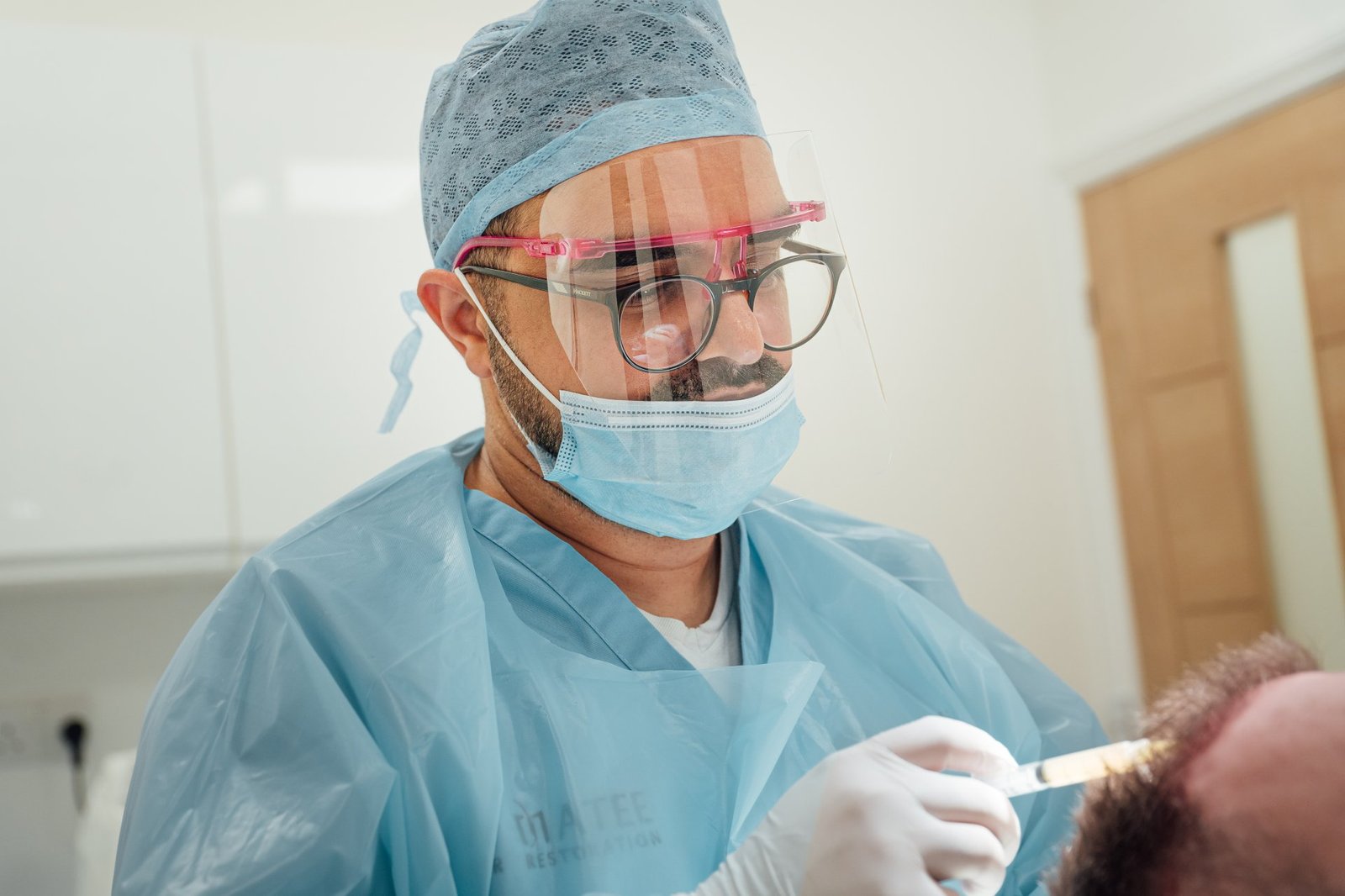
Follicular Unit Extraction on Dr Matee's own MinSim FUE™ protocol — every graft designed, extracted and placed by him, not delegated to a technician.
- AnaestheticLocal only — you are awake throughout
- DurationA single day, with breaks
- ScarringNo linear scar and no stitches
- Back to desk workUsually three to five days
- Final resultJudged at twelve months, not before
- Performed byDr Matee Ullah, GMC No. 7043306
In short
An FUE hair transplant moves follicular units one at a time from the back and sides of the scalp — where hair is genetically resistant to loss — into the areas that have thinned. It is done in a single day under local anaesthetic, leaves no linear scar, and you go home the same evening. Transplanted hair sheds at two to four weeks, regrows from three to four months, and reaches final density at twelve.
The technique
What makes MinSim FUE™ different
MinSim FUE™ combines Follicular Unit Extraction with the lateral slit technique for implantation. FUE governs how each unit leaves the donor area; the lateral slit governs the angle and direction it goes back in.
Standard FUE removes each unit with a punch, then makes a separate incision to place it. MinSim was developed to disturb the scalp less across that whole process — smaller punches, fewer passes over the donor area, and placement that follows the hair's own exit angle rather than a uniform grid.
The aim is two things at once: a result that reads as natural in the recipient area, and a donor area that recovers without the thinned, over-harvested look that aggressive extraction leaves behind.
Suitability
Are you a candidate?
Usually yes, if…
- Your loss has stabilised, or you understand it may continue
- The donor area at the back and sides is dense enough to supply the grafts
- You want coverage that suits your face, not the lowest possible hairline
- You are in general good health and can take a day out
Reasons you may be told no
- Loss is still actively progressing and you are in your early twenties
- The donor area cannot supply enough grafts for meaningful coverage
- An untreated scalp condition needs addressing first
- What you are hoping for is not achievable with the hair available
Operating on someone whose loss is still advancing can strand a hairline in front of a receding crown ten years later. Being turned down is not a lost sale — it is the point of the consultation.
On the day
How the day runs
- On arrival
Design and agreement
The hairline is drawn on you and agreed before anything else happens. Nothing starts until you are happy with it.
- First hour
Preparation and anaesthetic
The donor area is trimmed and local anaesthetic given. The injections are the uncomfortable part; they take a few minutes.
- Morning
Extraction
Follicular units are taken one at a time from the back and sides, then held in solution while they wait to be placed.
- Midday
Break
You eat, stretch, use your phone. Most people find this the longest part of the day rather than the hardest.
- Afternoon
Placement
Each graft is placed at the angle and direction matching your existing hair. This is the part that decides whether the result reads as natural.
- Evening
Home
Aftercare explained, written instructions given, and you leave the same day.
Afterwards
What the twelve months look like
- Days 1–3
Swelling and soreness
Some swelling around the forehead is normal. Sleeping propped up helps. Washing begins on day three, exactly as instructed.
- Weeks 1–2
Crusting, then shedding
Small crusts form and clear. Around week two the transplanted hairs shed — expected, and not the graft failing.
- Weeks 2–4
Back to normal
Redness settles. Gym, swimming and heavy lifting resume after a fortnight, on the written schedule you were given.
- Months 3–6
New growth
New hair starts coming through, fine at first. The slowest stretch psychologically, and where aftercare matters most.
- Months 6–9
Thickening
Growth becomes obvious to you and to other people. Texture normalises as the hairs mature.
- Month 12
Final review
Density is judged here, in person, along with whether a second smaller session would add anything.
Results
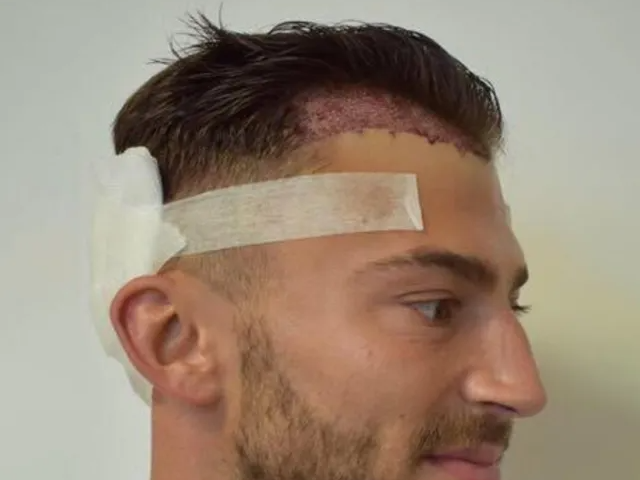
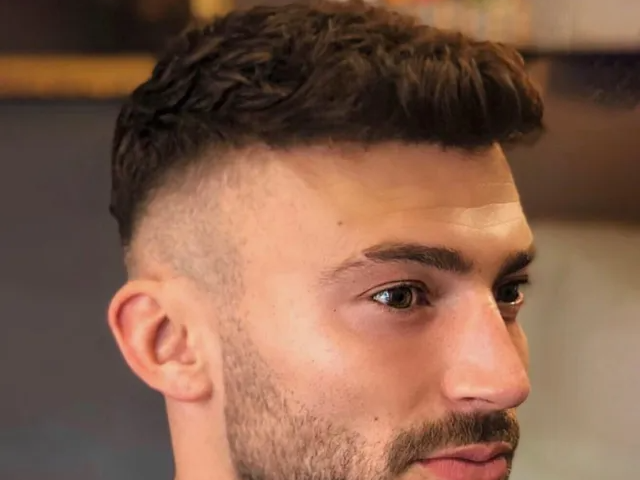
Judged at twelve months, not at three
 BeforeAfter
Straight, curly and afro hair
Curly and afro hair curves beneath the skin as well as above it. The punch has to follow that curve or the follicle is transected and lost, which is why not every clinic takes this work on.
Dr Matee treats all three hair types, each at a different punch angle.
Honesty
Risks worth knowing about
Every surgical procedure carries risk. These are the ones that actually come up, and they are covered properly at consultation rather than glossed over.
Shock loss
Existing hair around the recipient area can shed temporarily after surgery. It usually returns, but it is unsettling if nobody warned you.
Donor over-harvesting
Taking too much, too aggressively, thins the donor permanently. It is the most common damage seen in corrective cases.
Continued loss
A transplant moves hair; it does not stop genetic loss. Without a plan for the hair you keep, gaps can open behind the transplanted area.
Infection
Uncommon, and manageable when caught early — the practical argument for aftercare you can physically attend.
Numbness
Temporary altered sensation in the donor or recipient area is common in the first weeks and settles for most people.
Under-delivering
If donor supply cannot match expectations, the honest answer is fewer grafts or no surgery — not a compromised result.
Common questions
Asked before booking
Does a hair transplant hurt?
The procedure is carried out under local anaesthetic, so you should not feel the extraction or the placement. The injections at the start are the uncomfortable part and last a few minutes. Most patients describe the day as long and boring rather than painful. Soreness and tightness for two or three nights afterwards is normal.
How many grafts will I need?
It depends how much ground you are covering and how much donor hair you have to cover it with. The estimator on the home page gives an indicative range; only an in-person look at your donor density produces a real number.
Will it look obvious?
That comes down to hairline design almost entirely. Too low or too straight is what makes a transplant readable at a glance. Dr Matee designs and agrees the hairline with you in person, planned around how it will need to look as you age.
Can you treat afro or curly hair?
Yes. Curly and afro hair curves beneath the skin as well as above it, so the punch has to follow that curve or the follicle is cut and lost. It is a different technical job from straight hair and not every clinic takes it on.
Will I need a second session?
Some people do, particularly if loss continues after the first procedure. That is judged at the twelve-month review, not before, and only if a second session would add something worthwhile.
Does a transplant stop further hair loss?
No. A transplant moves hair that is genetically resistant to loss; it does not stop the loss affecting your other hair. Protecting what you keep is a separate conversation at consultation.
Also offered
Other treatments
Where this is performed
Two surgical clinics, seven consultation cities
Surgery takes place in Kent or Manchester. Consultations are available closer to home in seven further cities — all with Dr Matee himself.
Not sure which is nearest? All clinic addresses and phone numbers are listed together.
Find out where you actually stand
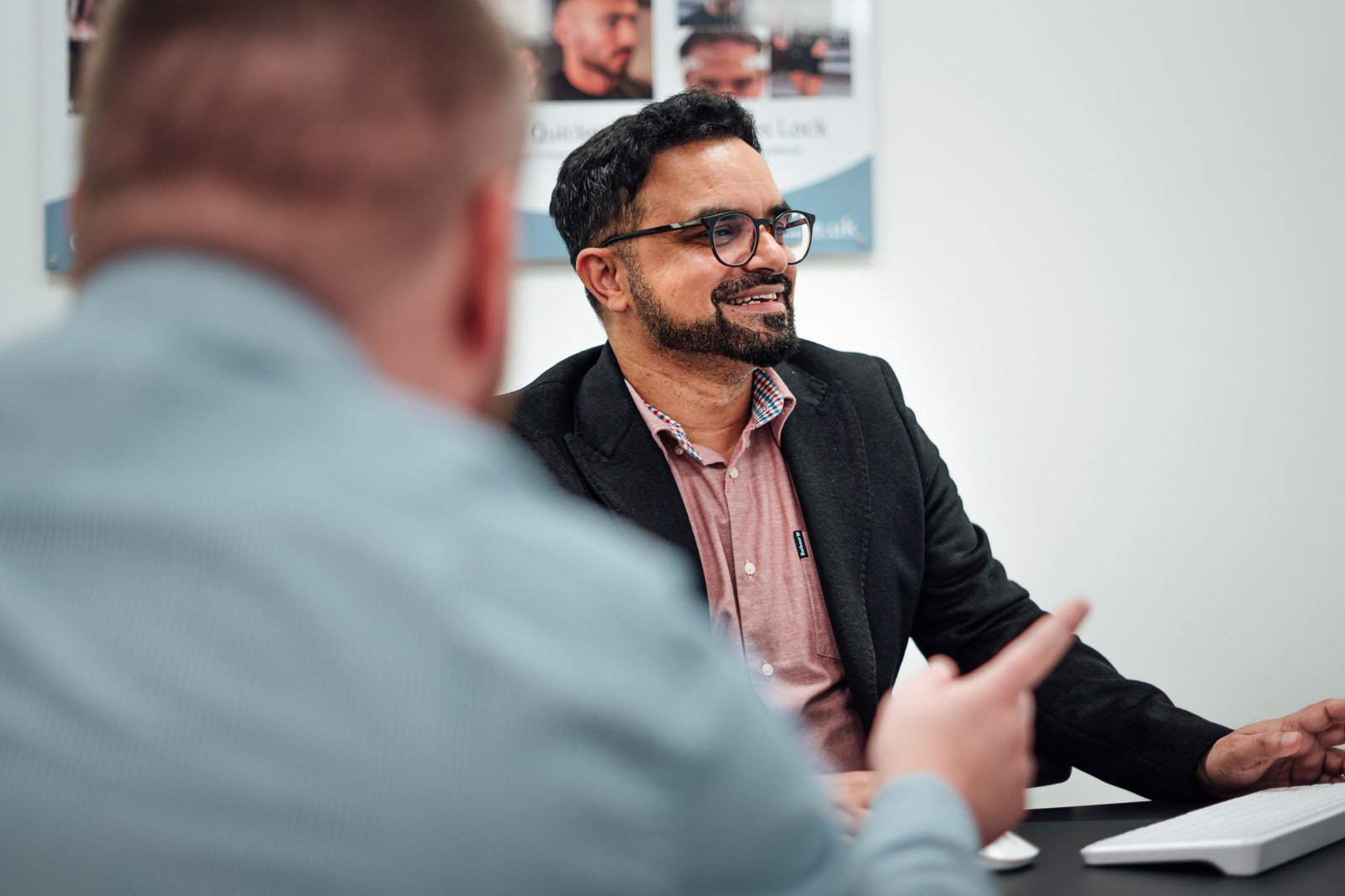
A free, in-person assessment with Dr Matee — donor density, a realistic graft count, and a straight answer on whether surgery is right for you.