
Patient story
QPR’s Grant Hall — 12 months after his hair transplant
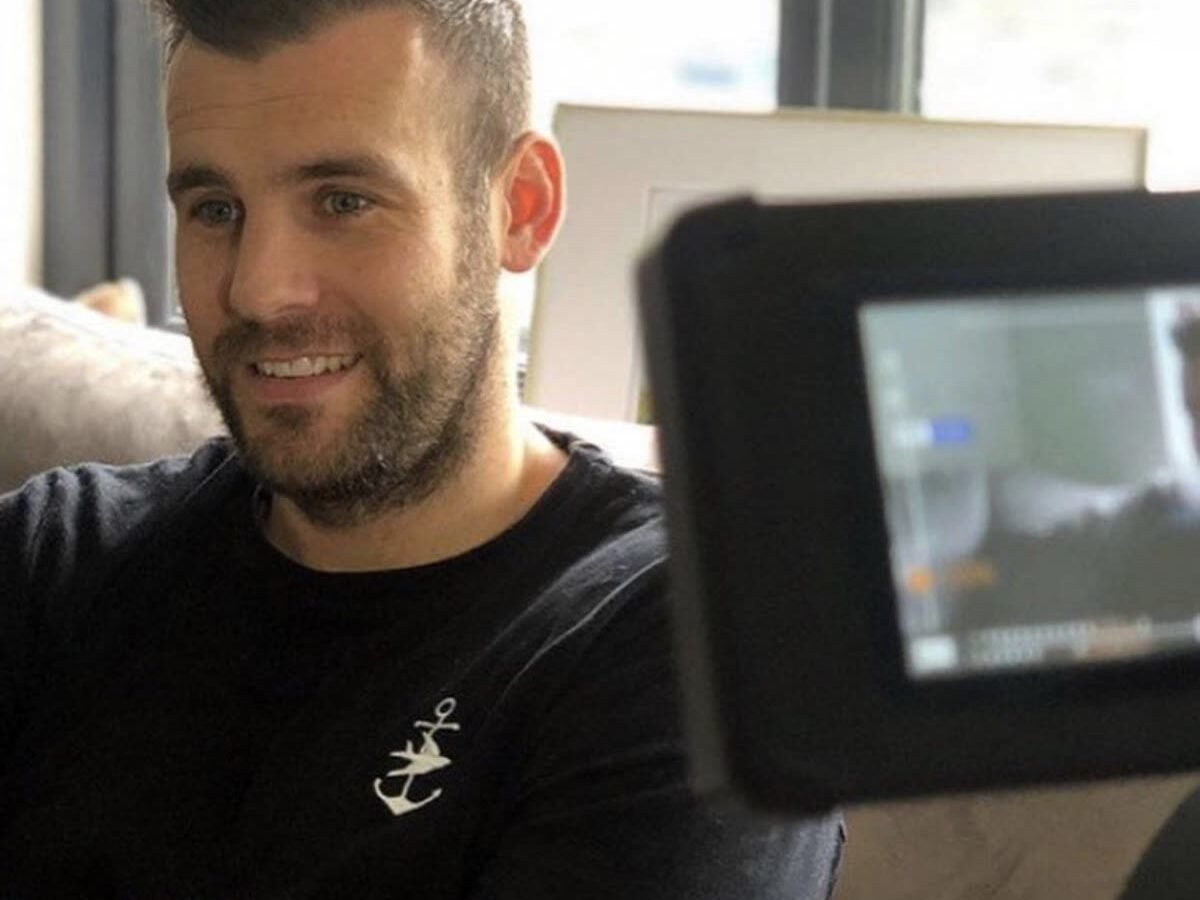
Championship defender Grant Hall came back to KSL Clinic Kent a year after his procedure — for a review, a PRP session, and a look at how the hairline had settled.
Dr Matee and his team were pleased to welcome QPR defender Grant Hall to KSL Clinic for his one-year review. He had first visited the Kent clinic the previous year, accompanied by his girlfriend Chloe Goodman, who was supportive throughout the procedure.
During the review visit, and while having PRP hair therapy, Grant talked about how pleased he was with the results of his hair transplant. Twelve months on, the hairline had grown in naturally and the density had reached the level planned at the start.
Grant is one of a number of sportsmen who have chosen Dr Matee for hair restoration — among them former England, Blackburn and Spurs goalkeeper Paul Robinson, and Major League Soccer forward Johnny Russell.
See more <a href="”>patient results, or read how an <a href="”>FUE hair transplant works. Twelve months is the point at which a transplant can properly be judged. Growth begins at three to four months and thickens through six to nine, but final density is not there until a year has passed — which is why the one-year review exists as a fixed appointment rather than an optional one.
What a twelve-month review actually involves
It is not a courtesy appointment. Density is assessed against what was planned at the outset, the donor area is checked for how well it has recovered, and photographs are taken under the same conditions as the originals so the comparison means something.
The conversation that follows covers whether a second, smaller session would add anything worthwhile, and whether the hair that was never transplanted needs a plan of its own. A transplant relocates hair that is genetically resistant to loss; it does not stop loss affecting everything around it.
Why twelve months rather than six
Transplanted hairs shed between two and four weeks after the procedure. That is expected and is not the graft failing — the follicle stays where it was placed. New growth begins at around three to four months, becomes obvious at six, and continues thickening through months six to nine as individual hairs mature and coarsen.
Judging a result before twelve months is the most common mistake patients make. At six months the work is visibly succeeding but nowhere near finished, and people who panic at month four are usually looking at an entirely normal timeline.
Where PRP fits alongside a transplant
Grant had <a href="”>PRP therapy during the review visit. Platelet-rich plasma is drawn from the patient’s own blood, spun in a centrifuge to separate the platelet fraction, and reinjected into the scalp to stimulate follicles into an active growth phase.
It works on follicles that are still present but underperforming, so it supports existing hair rather than replacing what a transplant does. Used together, the transplant restores areas already lost and PRP helps look after what remains.
If you are considering the same
Sportsmen tend to ask the same two questions: how long they will be out, and whether it will be obvious. Desk work usually resumes within three to five days; anything physical waits a minimum of a fortnight. Whether it reads as natural comes down almost entirely to hairline design, which is agreed in person before anything is booked.
The <a href="”>MinSim FUE™ page covers the technique in detail, and further <a href="”>patient results are published separately.
More reading
Other patient stories
Find out where you actually stand
A free, in-person assessment with Dr Matee — donor density, a realistic graft count, and a straight answer on whether surgery is right for you.