
Home/Treatments/Eyebrow transplant
Eyebrow transplant · Kent & Manchester
Brows rebuilt
hair by hair.
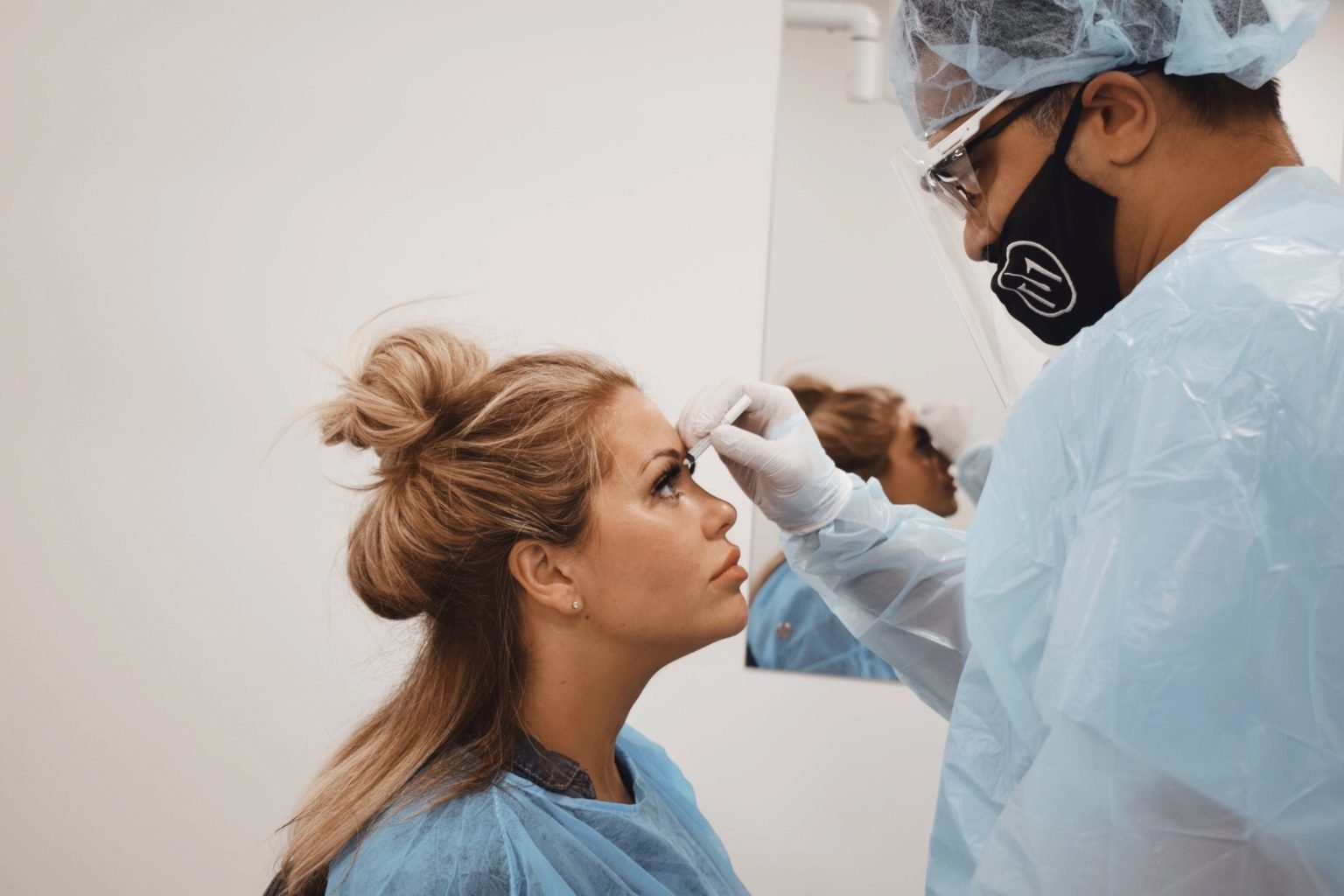
FUE eyebrow transplants for over-plucking, alopecia and scarring — the most technically demanding work Dr Matee performs, because brow hairs sit almost flat to the skin.
- AnaestheticLocal only — you are awake throughout
- Typical graftsA few hundred per brow, confirmed at consultation
- Donor areaBack and sides of your own scalp
- Aftercare noteTransplanted brow hair needs regular trimming
- Final resultJudged at twelve months
- Performed byDr Matee Ullah, GMC No. 7043306
In short
An eyebrow transplant places individual follicles into the brow to rebuild shape and density. Because brow hairs lie almost flat against the skin and change direction along the brow, every graft has to be angled by hand. The transplanted hair comes from your scalp and keeps scalp growth behaviour, so it will need trimming.
Why people have it done
Beyond pencils and tattooing
For years the options for thin or missing brows were makeup or tattooing — pencils, powders, brow mascaras, and more recently microblading. All of them sit on or in the skin, and all of them fade or need redoing.
A transplant is a different proposition: living follicles moved from your scalp that grow permanently in the new position. The most common reasons people come are years of over-plucking that never grew back, alopecia, and scarring from injury or surgery.
It is the most demanding work Dr Matee does. A scalp transplant places grafts at a steep angle into a broadly consistent field; a brow requires near-flat placement with the direction changing along its length. Get the angle wrong and the hair stands up rather than lying along the brow.
Suitability
Is an eyebrow transplant right for you?
Usually yes, if…
- Over-plucking has left brows that no longer grow back
- Alopecia or scarring has left defined gaps
- You want a permanent result rather than something to re-do
- You are comfortable trimming the transplanted hair as it grows
Reasons you may be told no
- Alopecia affecting the area is currently active and unstable
- An untreated skin condition around the brow needs addressing first
- The shape you are picturing does not suit the underlying brow bone
- You would prefer something reversible — in which case makeup or microblading may suit you better
Design is agreed in person before anything is booked. Brow shape carries a lot of a face's character, so this is drawn and discussed rather than assumed.
Afterwards
How recovery runs
- Days 1–3
Swelling and crusting
Mild swelling around the brow and eyes is normal, along with small crusts around each graft.
- Week 1
Crusts clear
The area settles and looks much more normal. Washing follows the written instructions you are given.
- Weeks 2–4
Shedding
The transplanted hairs shed. Expected, and not the graft failing.
- Months 3–6
Growing back
New hairs come through and begin to establish. Trimming starts once they are long enough.
- Month 12
Final review
Shape and density are judged here, along with whether a small top-up would improve the line.
Common questions
Asked before booking
Do transplanted eyebrows keep growing?
Yes. The hair comes from your scalp and keeps its original growth behaviour, so it grows longer than brow hair does and needs trimming — usually every couple of weeks.
How many grafts does an eyebrow take?
Typically a few hundred per brow, depending on how much is being rebuilt. It is a small number compared with a scalp transplant, but each graft takes far longer to place.
How is it different from microblading?
Microblading is pigment in the skin and fades over time. A transplant moves living follicles that grow permanently. They solve the same problem in fundamentally different ways.
Will it look natural?
Brow hairs sit almost flat against the skin and change direction across the brow. Every graft is angled individually to follow that pattern. It is slow work, which is why it is the most demanding procedure Dr Matee performs.
Can it cover scarring?
Often, yes, though scar tissue has a poorer blood supply and density expectations need to be realistic. It is assessed individually.
How long is recovery?
Small crusts form and clear within about a week. The transplanted hairs shed at two to four weeks and regrow from three to four months, maturing by twelve.
Also offered
Other treatments
Where this is performed
Two surgical clinics, seven consultation cities
Surgery takes place in Kent or Manchester. Consultations are available closer to home in seven further cities — all with Dr Matee himself.
Not sure which is nearest? All clinic addresses and phone numbers are listed together.
Find out where you actually stand
A free, in-person assessment with Dr Matee — donor density, a realistic graft count, and a straight answer on whether surgery is right for you.